Schedule
Any changes to the schedule will be reflected here, so we advise you to check this page often.
We will use Canvas for class announcements, materials and other administrivia.
The class meets Wednesdays, 1:30–2:50pm. The location STLC 105.
April 2
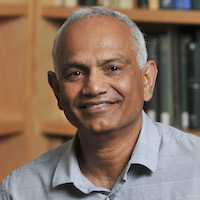 |
Balasubramanian Narasimhan (Stanford University)
Marlowe: Stanford’s new GPU Cluster
We introduce Stanford’s new GPU-based computational instrument, Marlowe. We will discuss Marlowe’s role in high performance computing infrastructure on campus, what makes it different from existing clusters, and policies that govern its use,. Finally we will delve into software and tools available on the system, and focus on best practice, workflows, all illustrated with examples.
April 9
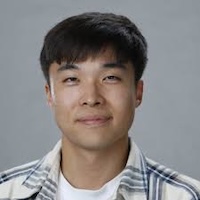 |
BIOMEDICA: An Open Biomedical Image-Caption Archive, Dataset, and Vision-Language Models Derived from Scientific Literature
The development of vision-language models (VLMs) is driven by large-scale and diverse multimodal datasets. However, progress toward generalist biomedical VLMs is limited by the lack of annotated, publicly accessible datasets across biology and medicine. Existing efforts are restricted to narrow domains, missing the full diversity of biomedical knowledge encoded in scientific literature. I’ll introduce BIOMEDICA, a scalable, open-source framework to extract, annotate, and serialize the entirety of the PubMed Central Open Access subset into an easy-to-use, publicly accessible dataset. Our framework produces a comprehensive archive with over 24 million unique image-text pairs from over 6 million articles. Metadata and expert-guided annotations are also provided. I’ll demonstrate the utility and accessibility of BIOMDECIA using BMCA-CLIP, a suite of CLIP-style models continuously pre-trained on the BIOMEDICA dataset via streaming, eliminating the need to download 27 TB of data locally. I’ll show that our models achieve state-of-the-art performance across 40 tasks - spanning pathology, radiology, ophthalmology, dermatology, surgery, molecular biology, parasitology, and cell biology - excelling in zero-shot classification and stronger image-text retrieval, all while using 10x less compute. To foster reproducibility and collaboration, our codebase and dataset is open to the broader research community.
Speaker Bio: Min Woo Sun is a PhD candidate at Stanford working on machine learning for biology and medicine, jointly advised by Serena Yeung and Robert Tibshirani. He is also a Stanford Data Science Scholar. He has interned as a Machine Learning Engineer at Hugging Face, worked on NGS lab workflows at Invitae, and early cancer detection at Guardant Health.
April 16, 23
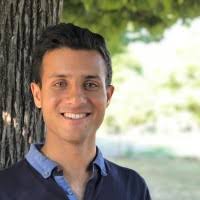 |
Akshay Agrawal (marimo)
marimo: A Next Generation Python Notebook That Brings Your Data to Life
We present a new kind of open-source Python notebook called marimo, designed from the ground up to solve problems with Jupyter notebooks while also giving developers new capabilities. Unlike Jupyter notebooks, marimo notebooks are reproducible, stored as pure Python, reusable as Python scripts, and shareable as web apps — all from an AI-native editor designed for working with data. marimo was originally developed in consultation with scientists at Stanford, and is now used at companies and universities around the world. We’ll get into why marimo was developed, its key design decisions, and — most important — how it lets you interact with data in ways that were previously not possible. Bring your laptops for a hands-on learning experience.
Speaker Bio: Akshay is both a researcher, focusing on machine learning and optimization, and an engineer, having contributed to several open source projects including cvxpy and TensorFlow (when at Google). He has BS and MS in Computer Science, and also a PhD in Electrical Engineering from Stanford University under Stephen Boyd. Lately, his focus has been in building marimo, a new kind of reactive notebook for Python that’s reproducible, git-friendly (stored as Python files), executable as a script, and deployable as an app.
April 30
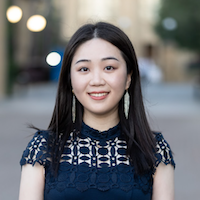 |
Sophia Lu (Stanford)
Modern Bayesian Modeling and Adaptive Bayesian Inference
In this session, I will motivate and explore the core ideas that underlie the Bayesian approach to statistical inference. We begin by contrasting Bayesian and frequentist philosophies—showing how Bayes’ theorem turns prior beliefs and observed data into a coherent posterior distribution over unknown quantities. We then develop the simplest conjugate examples (Gamma–Poisson, Beta-binomial, and normal–normal) to illustrate how priors update analytically and memory-efficiently, and to build intuition for posterior summaries. Next, we introduce hierarchical models and demonstrate how they “share information” across groups via hyper-priors, stabilizing estimates when data are sparse.
Throughout, we emphasize the three pillars of a Bayesian workflow:
- Model specification (data likelihood + prior),
- Computation (analytical conjugacy and, where needed, Monte Carlo sampling),
- Interpretation (posterior summaries, credible intervals, and predictive checks).
In the final part of the session, we turn to simulation-based inference for models with intractable likelihoods—known as likelihood-free inference. Building on recent advances in neural networks and generative modeling, we will cover Approximate Bayesian Computation and modern neural density estimation techniques (e.g., normalizing flows) that harness deep learning and generative modeling toolkits to approximate complex posteriors when no closed-form solution exists.
Speaker Bio: Sophia is a fourth-year Ph.D. candidate in the Department of Statistics at Stanford University, advised by Professor Wing H. Wong, and a Stanford Data Science Scholar. Broadly, her research interests lie at the intersection of efficient Bayesian inference and modeling, the development of robust, interpretable, and theoretically grounded statistical machine learning methods, and their applications to computational genomics. She is currently focused on two main areas: developing efficient sampling algorithms for posterior inference in the absence of tractable likelihoods, and advancing methodologies to extract novel insights from single-cell multiomics data. Her work aims to bridge the gap between advanced statistical methods and real-world applications, with the ultimate goal of providing practitioners with powerful, reliable tools for analyzing and interpreting complex datasets. Before pursuing her doctoral studies, Sophia earned a degree in Mathematical and Computational Science from Stanford University.
May 7
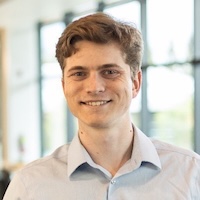 |
Garyck Brixi (Stanford)
Evo:Sequence modeling and design from molecular to genome scale with Evo
The genome is a sequence that encodes the DNA, RNA, and proteins that orchestrate an organism’s function. We present Evo, a long-context genomic foundation model with a frontier architecture trained on millions of prokaryotic and phage genomes, and report scaling laws on DNA to complement observations in language and vision. Evo generalizes across DNA, RNA, and proteins, enabling zero-shot function prediction competitive with domain-specific language models and the generation of functional CRISPR-Cas and transposon systems, representing the first examples of protein-RNA and protein-DNA codesign with a language model. Evo also learns how small mutations affect whole-organism fitness and generates megabase-scale sequences with plausible genomic architecture. These prediction and generation capabilities span molecular to genomic scales of complexity, advancing our understanding and control of biology.
Speaker Bio: Garyck Brixi is a Stanford PhD student in the Genetics Department working at the Arc Institute with Professor Brian Hie. He works at the intersection of machine learning and biology, developing new methods to learn from biological sequences. Previously, he studied Applied Math at Harvard with a secondary in Computer Science. During his time there, he worked with Sergey Ovchinnikov, Pranam Chatterjee, and Liming Liang.
May 14, 21
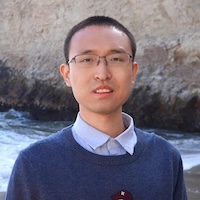 |
Zitong Yang (Stanford)
Lecture 1: Crash course on LLMs.
I will start with the basics of transformer and then move on to concepts of pretraining and finetuning. I will discuss pretraining data collection, filtering and tokenization and follow it up with finetuning data collection and techniques. In the process, we will encounter open source resources: PyTorch, Huggingface model hub.
Lecture 2: Frontiers in LLM scaling.
Large but finite internet data that has powered AI scaling in the past decade is rapidly being depleted by the frontier models, motivating people to search for new frontiers such as test-time scaling. In this talk, I will introduce two recent projects that probe into this seemingly simple yet substantially complex frontier in AI scaling. First, I will present synthetic continued pretraining, a technique that coverts excess compute to statistical signal that scales the model towards better data-efficiency. Next, I will share the s1-32B model, an open-source test-time scaling reproduction with minimal resource, promoting a transparent understanding of this emerging scaling paradigm. Overall, we will see that there are exciting opportunities around (continued) pretraining data scaling, and a cautiously optimistic path toward test-time scaling.
Speaker Bio: Zitong Yang is a statistician at Stanford NLP group. He solves problems an AI engineer might care about, in a way statisticians would prefer. He is jointly advised by Prof. Emmanuel Candès and Prof. Tatsunori Hashimoto. Prior to Stanford, he spent some amazing years at Berkeley, working with Yi Ma and Jacob Steinhardt.
May 28
 |
Rishi Puri (NVIDIA)
GNNs & LLMs in PyG
Speaker Bio: Rishi Puri graduated from UC Berkeley and is a lead engineer for the Deep Learning FrameWork PyG at NVIDIA. He is also a core contributor to the open source PyG framework and community. His main focus is researching how to combine state of the art graph and language modeling techniques. He enjoys teaching about this work at Stanford, conferences, webinars, and through the PyG Slack and LinkedIn communities.
This talk will cover how Graph Neural Networks can be used to enhance LLMs using PyG to improve accuracy for RAG like tasks across any kind of data domain. This will include examples on real world data. We will also cover how LLMs can be used to enhance GNNs for graph machine learning tasks.
June 4
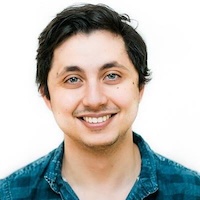 |
Anastasios Angelopoulos (Berkeley)
Chatbot Arena: An Open Platform for Evaluating LLMs by Human Preference.
Speaker Bio: Anastasios Nikolas Angelopoulos is a Ph.D. student at the University of California, Berkeley advised by Michael I. Jordan and Jitendra Malik. He was previously an electrical engineering student at Stanford University advised by Gordon Wetzstein and Stephen P. Boyd. He is broadly interested in the use of black-box machine learning models for decision-making and statistical inference, as well as cross-disciplinary research in imaging, medicine, and biology. He is especially excited about bridging modern AI systems with statistics to ensure their effective and responsible use.